
Shopping Cart


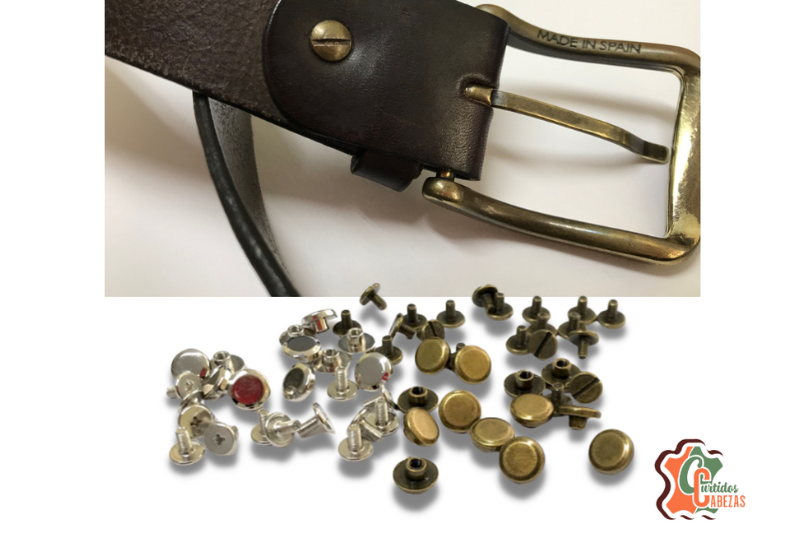
Knowing the types of rivets and the types of riveters is essential to achieve strong, durable joints with a professional finish in leatherwork, leather goods, footwear or DIY projects. Choosing the right rivet and the appropriate tool will make the difference between a long-lasting job and one that fails with use.
A rivet is a permanent fastening element used to join two or more pieces of material by deformation. Unlike screws or nails, a rivet remains fixed and does not loosen over time, making it ideal for leather, thick textiles, thin metal and material combinations.
In leatherwork, rivets are used both structurally and decoratively: belts, bags, straps, harnesses or reinforcements subjected to tension.
There are different types of rivets depending on their shape, setting system and final use. The most common in craft work are:
Hammer-set rivets are installed by impact, usually with a hammer and a specific setting tool. They are the most common in artisan leatherwork due to their simplicity and reliability.
The process involves punching the leather, inserting the rivet and deforming the shank with a controlled удар to ensure a solid fastening without damaging the material.
Not all types of riveting are suitable for every material. It is important to adapt the system to the type of joint:
Choosing correctly among the different types of rivets and sizes is essential. The shank length must match the total thickness of the materials being joined.
A rivet that is too short will not fasten properly, while one that is too long will deform incorrectly and be weak or visually flawed.
There are different types of riveters depending on the workload and the type of rivet:
To choose the right tool, you should consider the type of rivet, the material, frequency of use and the level of precision required. For artisan work, a good hammer-set riveter with the appropriate setting tools is usually more than enough.
Although both are used to join materials, rivets offer greater resistance to vibrations and do not loosen with use. The screw, on the other hand, allows disassembly. In leatherwork, rivets are usually the most reliable and aesthetic option.
Avoiding these mistakes ensures a clean and professional finish.
Always work on a solid base, use suitable setting tools, control the striking force and test first on a scrap piece. Practice is key to mastering the different types of rivets and riveting techniques.
At Curtidos Cabezas you will find rivets, riveters and specific tools for leather, as well as expert advice to help you choose the most suitable option for your project.


Comments (0)