
Shopping Cart

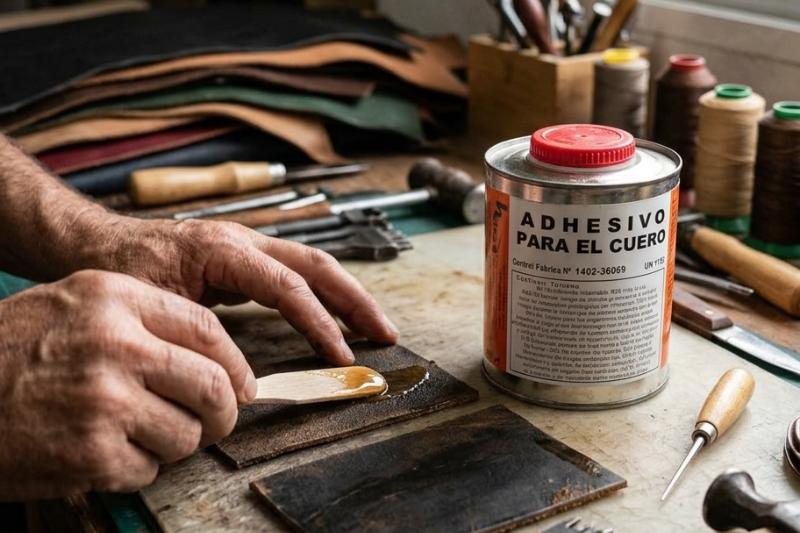
Choosing the right leather adhesive can make the difference between a temporary repair and a truly long-lasting finish. In this guide, you will discover which glue to use for natural and synthetic leather, when to use leather adhesive tape, how to apply adhesive leather patches, and which mistakes to avoid in order to achieve a strong, clean, and professional bond.
Choosing the best leather adhesive depends on the type of material, the final use, and the level of flexibility required for the repair. Natural leather and synthetic leather share certain needs, but their structure and behavior are different.
Among the adhesives most commonly used by craftsmen and professionals are:
Natural leather has a fibrous structure that absorbs part of the adhesive, creating a deep and extremely strong bond. Synthetic leather, on the other hand, usually has a plastic or textile base that requires adhesives with greater surface adhesion.
That is why a product that works perfectly on genuine leather may not deliver the same results on faux leather, PVC, or similar materials. Choosing correctly will prevent premature peeling and failed repairs.
Leather adhesive tape can be useful as a temporary solution, as a pre-stitching fixation, or for small decorative adjustments.
However, it is not always the best option. It is not recommended for:
In these cases, a professional adhesive will provide a much more reliable bond.
Adhesive leather patches are a quick alternative for covering cuts, scuffs, or small cracks without the need for sewing.
They are especially popular for:
Besides repairing, they can also provide a customized or decorative finish.
When talking about leather adhesive for sofa repair, we need products capable of withstanding bending, weight, and daily friction.
The best options are usually:
Choosing an adhesive that is too rigid may cause new cracks over time.
Before applying any product, analyze:
Repairing a belt, bag, wallet, sofa, or decorative piece does not require the same approach.
A professional repair depends not only on the adhesive itself, but also on how it is applied. Using the right tools improves precision and prevents excess product.
Avoiding these mistakes significantly improves repair durability.
Leather repair adhesive tape works well as temporary support, fixation during stitching, or for small decorative repairs.
It should be avoided in areas exposed to pulling forces, repeated bending, or surfaces subject to constant friction.
A professional repair starts with quality materials. At Curtidos Cabezas, you will find professional adhesives, application tools, and everything needed to work with natural and synthetic leather for long-lasting results.
From contact adhesives to professional sprays, including brushes, containers, and application spatulas, having the right tool will make the difference between a temporary repair and a truly professional finish.


Comments (0)