
Shopping Cart


Belt buckles are one of the most important components in the manufacture of leather belts. They not only serve the practical purpose of fastening the belt but also add personality, style, and quality to the finished product. Understanding the different types of belt buckles will help you choose the most suitable option for every leathercraft project, whether you're making a classic belt, a modern design, or a fully customized piece.
In this article, you'll discover the main types of buckles for belts, their features, materials, sizes, and installation tips to achieve a professional finish.
There are many different types of belt buckles, but the main difference between them lies in their fastening system and the way they are attached to the leather. Choosing the right buckle ensures greater comfort, improved durability for everyday use, and a finish that matches the style of the belt.
The most common fastening systems are:
Each type is designed to meet different needs. While a traditional pin buckle is perfect for classic leather belts, automatic buckles offer much more precise adjustment and a more contemporary appearance.
In the Curtidos Cabezas belt buckle collection, you'll find a wide range of models suitable for both handcrafted leatherwork and professional production.
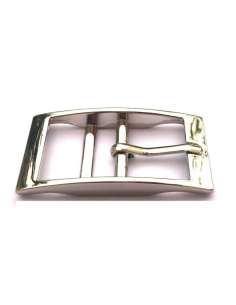
Pin buckles are the most widely used option in traditional leathercraft. They work by using a metal pin that passes through the holes in the belt, allowing the length to be adjusted quickly and securely.
Their main advantage is reliability. They are durable, easy to install, and compatible with virtually every type of leather. They are also ideal for creating elegant belts for both men and women.
This type of buckle is available in a variety of sizes, finishes, and styles, ranging from minimalist designs to western and vintage-inspired models.
For a strong and durable assembly, it is recommended to secure the buckle using belt and strap screws, as they allow the buckle to be easily removed for future repairs or replacement.
In recent years, automatic buckles, also known as ratchet buckles, have become increasingly popular. Unlike traditional buckles, they do not require holes in the belt.
Inside, they feature a toothed locking mechanism that secures the belt at multiple positions, providing a much more precise and comfortable fit.
This system is particularly suitable for dress belts, as it greatly improves the appearance by eliminating visible holes in the leather strap.
In addition, belt wear is reduced because the leather is no longer subjected to continuous pressure from the pin on a single hole.
Removable buckles are becoming increasingly popular, especially among leatherworkers who create custom-made belts. Thanks to this system, the buckle can be replaced without modifying the entire belt.
An excellent example is the 35 mm reversible buckle with loop, which allows the belt to be worn on both sides simply by rotating the buckle.
This type of solution offers excellent versatility and makes it possible to combine different leather colours using a single buckle.
Besides the fastening system, it is also important to consider the material the buckle is made from.
The most common materials include:
Each material offers its own advantages. Stainless steel stands out for its excellent corrosion resistance, while solid brass provides an elegant, classic appearance that is highly appreciated in premium-quality belts.
The finish also has a significant impact on the overall look of the belt. Buckles are available in nickel, antique brass, matte black, gunmetal, satin, or aged finishes to suit any style.
Choosing the right buckle is not only about its design or finish. One of the most important factors is ensuring that its dimensions are compatible with both the width and thickness of the leather strap. A buckle that is too small will make assembly difficult, while one that is too large may cause unwanted movement and an unprofessional finish.
In leathercraft, belts are commonly made in widths between 30 and 40 mm, although 25 mm, 45 mm, and even 50 mm options are also available for specific applications. Before purchasing a buckle, it is advisable to measure the leather strap accurately and choose a buckle designed for that width.
If you're making your own belt, you can start with leather belt straps, ready to use and available in different widths, thicknesses, and finishes. Using a high-quality leather strap will make buckle installation easier and significantly increase the belt's durability over time.
Another important consideration is the thickness of the leather. Thick leather requires buckles with sufficient internal clearance to allow the leather to fold without putting excessive stress on the assembly. Conversely, belts made from thinner leather are best paired with lightweight buckles that are proportionate to the overall design.
In addition to the buckle width, there are other components that directly affect the proper performance of the belt. Belt loops, rectangular loops, and screws must all be compatible with both the leather thickness and the chosen buckle design.
Metal loops and rectangular rings help keep the belt keeper securely in place while adding stability to the entire assembly. Selecting the correct size prevents unnecessary movement and improves the finished appearance of the belt.
Likewise, belt screws have become one of the preferred fastening methods among leatherworkers because they allow the buckle to be easily removed for repairs, replacement, or changing to a different style without having to make a completely new belt.
Before starting the assembly, always check:
Taking a few minutes to verify these measurements will help prevent assembly errors and ensure a far more professional result.
Installing a belt buckle is a straightforward process, but it requires precision to achieve a clean, durable, and professional finish. Using the right tools and taking accurate measurements from the beginning will help you avoid mistakes and unnecessary rework.
Follow these basic steps to install a belt buckle correctly:
A carefully installed buckle not only enhances the appearance of the belt but also significantly extends its lifespan. Small details, such as perfectly aligning the buckle or securely fastening the screws, make the difference between an amateur project and a genuine handcrafted leather product.
If you want to make leather belts with professional-quality finishes, at Curtidos Cabezas, you'll find a wide selection of buckles, belt keepers, screws, and leather straps to suit every style of belt. Whether you're looking for a traditional pin buckle or a modern solution with reversible or removable buckles, you'll have access to high-quality materials to complete your leathercraft projects with confidence.
Browse our collection of belt buckles and find the perfect model for your next leathercraft project. Combining a high-quality buckle, premium leather, and precise craftsmanship will result in a belt that is durable, functional, and finished to the highest standard.



Comments (0)